Movie Rating: 7.5/10
Movie Review by Ratan Srivastava
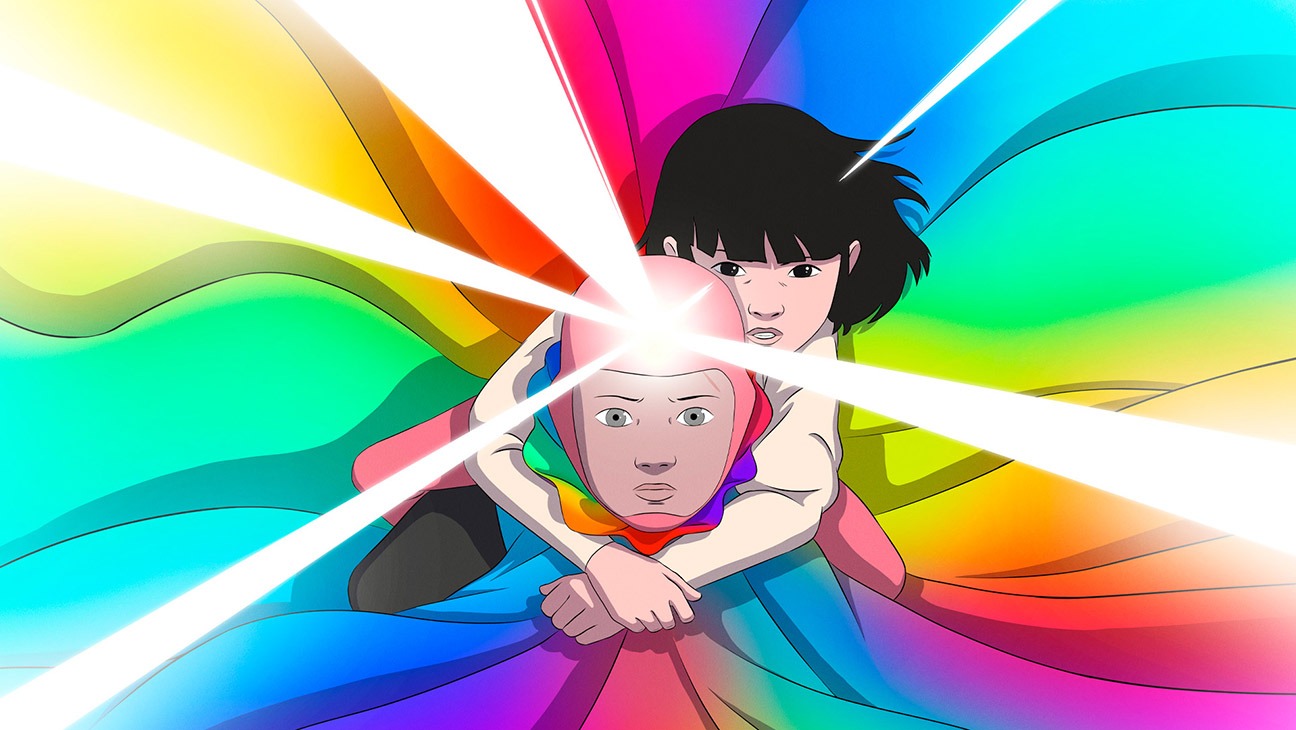
The French animated movie Arco, nominated for Best Animated Feature at the 2026 Oscars, unfolds like a tender bridge between two timelines. At its heart are two children, Arco and Iris, who belong to entirely different eras. Arco comes from the distant future while Iris lives in a near-future world. Their paths cross through a rainbow-like phenomenon, a symbolic connection that ties their destinies together.
Interestingly, when their names are combined, they form “Arcoiris,” the Spanish word for rainbow, which perfectly reflects the film’s central metaphor: two worlds, two timelines and two perspectives coming together in harmony. The idea instantly evokes memories of heartfelt animated fantasies like Your Name, where emotional bonds transcend time and distance.
Through Arco and Iris, the film gently explores themes of companionship, loneliness and interdependence. Their relationship becomes the emotional centre of the story, much like the colours of a rainbow coming together after rain and sunshine.
Story & Screenplay
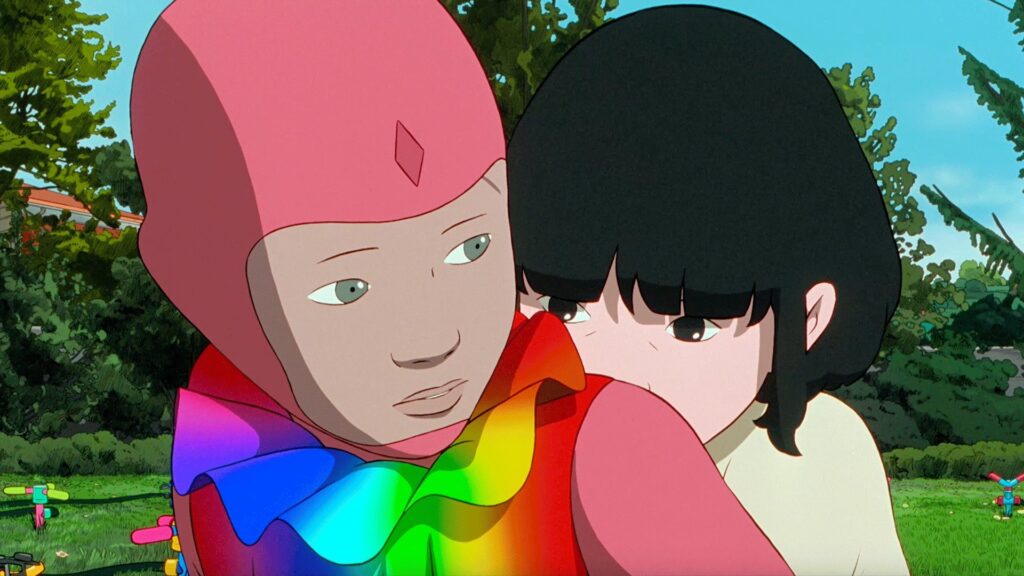
Written by Ugo Bienvenu and Félix de Givry, the narrative feels like a loving tribute to the imaginative storytelling traditions of Hayao Miyazaki and Steven Spielberg.
The world of Arco, set in the year 2932, features floating circular houses nestled in the clouds, a visual idea that instantly recalls the dreamy landscapes often seen in Studio Ghibli films. In contrast, Iris’ world in 2075 is technologically advanced but emotionally distant, where robots dominate daily life and humanity struggles with environmental disasters such as wildfires.
This duality gives the story both emotional and thematic depth. Arco is a curious 10-year-old who dreams of exploring beyond the rules imposed by his parents, while Iris is a lonely child seeking connection in a world increasingly run by machines. When Arco accidentally lands in her world after sneaking out to fly, the two form an instant and heartfelt bond.
The screenplay subtly layers several ideas beneath its simple premise: the dangers of unchecked technology, the consequences of environmental damage and the enduring importance of human connection. These themes unfold organically through the characters’ journey rather than through heavy exposition.
Dialogues, Music & Direction
The dialogues are intentionally simple, reflecting the innocent perspective of the children while still carrying meaningful ideas. The background score is gentle and soothing, complementing the film’s emotional tone beautifully.
What truly stands out, however, is the hand-drawn 2D animation style. Its soft textures, warm colours and dreamlike landscapes clearly echo the visual language of Studio Ghibli classics. The influence of Hayao Miyazaki’s storytelling and aesthetic sensibilities is unmistakable. From the environmental undertones to the quiet emotional moments between characters, the film feels deeply inspired by that tradition.
Yet, Arco never feels like a mere imitation. Instead, it respectfully channels that inspiration into its own identity. Director Ugo Bienvenu crafts the film with remarkable sincerity, balancing imaginative world-building with heartfelt emotional beats.
The editing remains crisp, ensuring the narrative flows smoothly while preserving the emotional weight of key scenes. The direction ultimately creates a gentle yet immersive experience that keeps the viewer invested in the characters’ journey.
Voice Performances
The voice performances add warmth and personality to the characters.
Oscar Tresanini brings youthful energy to Arco, capturing both the character’s excitement and vulnerability. Margot Ringard Oldra as Iris delivers a deeply moving performance, blending innocence with emotional maturity.
Supporting performances from Oxmo Puccino, Sophie Mas, Vincent Macaigne, Louis Garrel, and William Lebghil add humour and emotional depth to the narrative. Bienvenu himself voices the robot Mikki, delivering a surprisingly heartfelt performance that adds another emotional layer to the story.
Conclusion
Arco is a sweet, visually enchanting and emotionally sincere animated film that celebrates imagination and human connection. Its storytelling and visual style clearly draw inspiration from the timeless magic of Studio Ghibli, particularly the works of Hayao Miyazaki, while also carrying echoes of Steven Spielberg’s emotional sci-fi storytelling.
The result is a film that feels both nostalgic and refreshing. It gently pulls at your heartstrings, leaving you with warmth, wonder and a sense of quiet optimism long after the credits roll.
A beautifully crafted animated experience and a highly recommended watch for anyone who appreciates heartfelt storytelling and the magic of hand-drawn animation.
